Pay-Per-Click advertising gives Scranton businesses something most marketing channels can’t: momentum. Instead of waiting months for visibility to build, Google PPC allows your business to appear immediately when someone nearby is actively searching for what you offer. That difference matters in a market where attention is short and competition is constant.
Search behavior has changed. People no longer browse casually when they need a service. They search with purpose, often using location-based terms, and they expect answers fast.
For businesses in Scranton, PPC isn’t about chasing every click or running ads nonstop. It’s about showing up at the right time, in the right place, for the right searches. Before deciding whether it fits your marketing mix, it’s worth breaking down what Google Pay-Per-Click advertising actually is and how it works behind the scenes.
What Is Google Pay-Per-Click (PPC) Advertising?
Google Pay-Per-Click advertising is built around one simple idea: visibility should match intent. For Scranton businesses, PPC works best when it’s aligned with a broader digital marketing strategy rather than treated as a standalone tactic. Instead of paying to be seen broadly, businesses pay to appear only when someone actively searches for a specific product or service. If there’s no click, there’s no cost. That alone separates PPC from most traditional advertising models.
What makes PPC different isn’t just where ads appear, but when they appear. These ads show up during moments of decision, not discovery. Someone searching on Google is usually comparing options, narrowing choices, or looking for a provider right now. PPC is designed to meet that behavior, not interrupt it. It connects businesses with people who are already moving toward action.
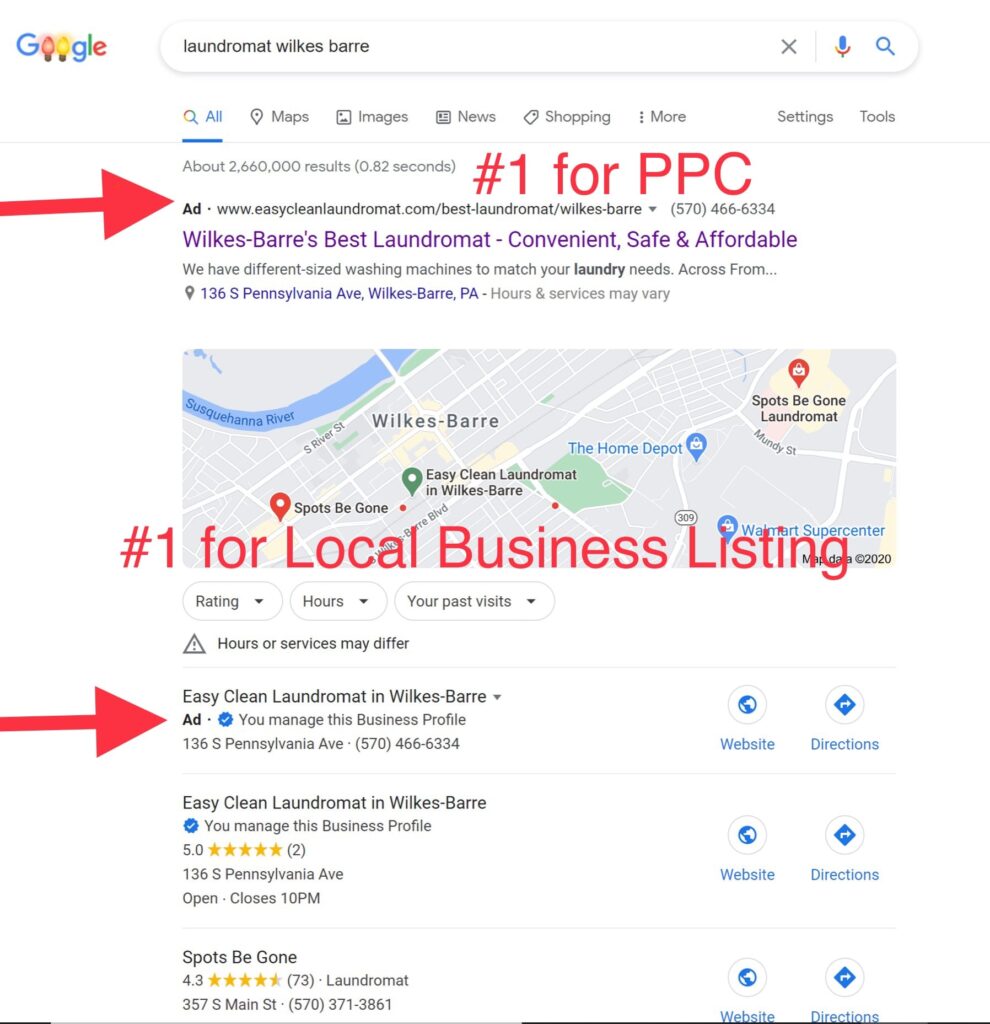
How Google Pay-Per-Click Works
At its core, Google PPC is triggered by search behavior, not ads. Someone types a phrase into Google because they need something. That action is what opens the door for ads to appear. If no one searches, nothing runs.
From there, Google decides which ads are worth showing. It’s not just about budget. Ads that closely match what was searched, make sense to the user, and lead somewhere relevant tend to show more often and cost less over time. Ads that miss the mark get pushed aside, regardless of spend.
That’s why PPC isn’t something you “set and forget.” Successful campaigns depend on structure, testing, and refinement — the same principles behind effective Google Ads strategies. It responds to how real people search, click, and react. The more aligned an ad is with actual intent, the more efficiently the system works.
Why PPC Is Beneficial for Local Businesses
Local businesses don’t need more visibility everywhere. They need visibility at the moment someone nearby is ready to act. PPC does that without guessing. It shows your business when a search already signals intent, not curiosity.
That matters locally because most buying decisions aren’t abstract. People search with location in mind, even when they don’t type it explicitly. PPC allows a business to intercept those searches instead of hoping organic results surface at the right time. When done correctly, it reduces wasted exposure and focuses budget on people who are already close to making a decision.
For local companies, that efficiency is the real advantage. PPC isn’t about volume. It’s about timing, relevance, and showing up when the window is open.
Why Google PPC Is Essential for Scranton Businesses
Scranton is not a slow market, even if it looks that way on the surface. Local businesses are competing not just with each other, but with regional companies and national brands that can afford to wait longer and spend more. PPC removes that advantage by letting smaller businesses appear without delay, not eventually. That’s why many local companies rely on Google Pay-Per-Click services in Scranton to compete immediately rather than wait for organic visibility to build.
What makes PPC essential in a place like Scranton is intent density. Fewer searches doesn’t mean weaker opportunity. It means the searches that do happen are usually purposeful. When someone in the area searches for a service, they’re often ready to compare options or make a call. PPC captures that moment instead of letting it pass to whoever happens to rank organically.
Without PPC, local businesses are relying on timing they don’t control. With it, they can decide when and where they appear, even in competitive categories. That level of control is what turns PPC from a “nice to have” into a practical necessity in a local market.
Instant Visibility on Google Search
Organic visibility takes time, and in many cases, patience runs out before rankings show up. PPC doesn’t wait. It allows businesses to appear as soon as a campaign goes live, which matters when leads are needed now, not months from now.
That immediacy changes how marketing decisions get made. Instead of guessing when traffic might arrive, PPC creates a direct line between search demand and visibility. When someone in the area searches for a service, your business has a chance to be seen right then, not after a long ramp-up period. In competitive local markets, that timing alone can be the difference between getting the call or missing it.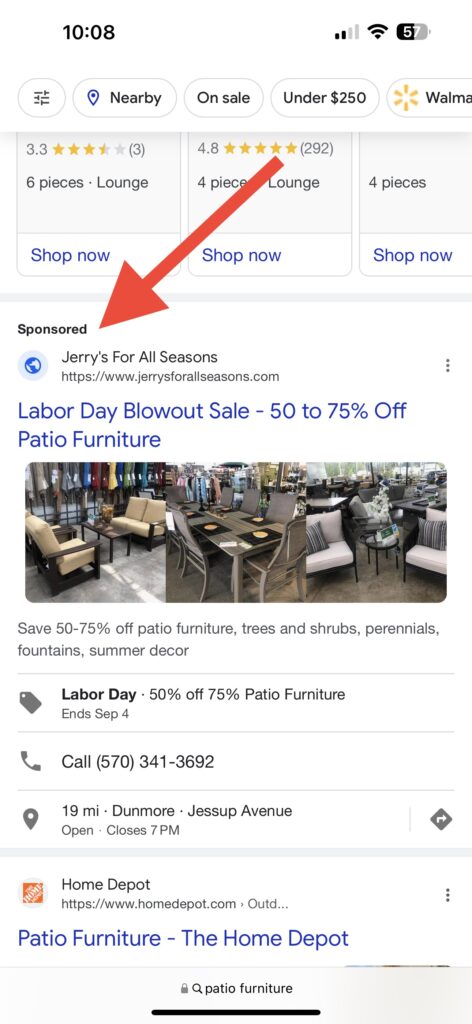
Reach Customers Ready to Buy
Not all traffic is equal. PPC focuses on searches that already show intent, not interest. When someone types a specific service, product, or solution into Google, they’re usually past the research phase and closer to making a decision. PPC puts your business in front of that moment.
For a local business, that timing is everything. Searches don’t happen in bulk, and decisions aren’t stretched out over weeks. People look, compare briefly, and choose. PPC works because it shows up inside that narrow window, not before it and not after it. High-intent PPC campaigns are designed to capture demand at the exact moment a search turns into a decision.
Compete with Larger Brands
Bigger companies usually win by default. They have more name recognition, more content, and more time to wait for results. PPC narrows that gap by allowing smaller businesses to appear in the same search results at the same moment, without needing years of visibility built up beforehand.
Larger brands tend to rely on broad coverage. Local businesses don’t have that luxury, but they don’t need it either. PPC rewards specificity. That advantage disappears if the click leads to a site that doesn’t build trust or clearly communicate value. Strong brand presentation and conversion-focused design often determine whether PPC traffic turns into real inquiries. When ads are tied closely to what someone is actually searching for and where they’re searching from, size matters far less than relevance. That’s where smaller businesses can realistically win attention.
Benefits of Google Pay-Per-Click Advertising (PPC)
One of the biggest advantages of PPC is how quickly it reveals what’s working and what isn’t. You don’t have to wait through long cycles to see whether a message connects or a search term attracts the wrong kind of attention.
PPC also gives businesses boundaries. Businesses decide when ads run, where they appear, and how much exposure makes sense. That structure keeps marketing from drifting into guesswork and helps businesses stay focused on activity that actually produces responses, not just visibility.
Highly Targeted Advertising
PPC doesn’t work because it reaches too many people. It works because it responds to very specific searches. Ads are triggered by what someone types, where they’re located, and when they’re searching. That naturally filters out most of the noise before money is ever spent.
For local businesses, that kind of filtering is what makes PPC sustainable. Fewer impressions aren’t a drawback when the searches are relevant. When ads align with real local demand, performance becomes steadier and more predictable, rather than hit-or-miss.
Budget Control and Flexibility
PPC forces decisions to stay current. Spend isn’t committed far in advance, which means advertising can respond to what’s actually happening in the business instead of sticking to a plan that no longer fits. For local companies, that matters when demand shifts or priorities change without warning.
The value is in responsiveness. Ads can be adjusted while results are unfolding, not reviewed weeks later after money is already gone. Weak spots get corrected quickly, and stronger performance isn’t boxed in by earlier assumptions. That keeps PPC grounded in day-to-day reality rather than turning it into a fixed expense that’s difficult to justify.
Measurable and Trackable Results
PPC doesn’t leave performance open to interpretation. You can see which searches trigger ads, which ads get ignored, and which actions actually follow a click. That clarity removes much of the guesswork that exists in other marketing channels.
For local businesses, that visibility matters because decisions don’t have to be based on assumptions. You’re not relying on impressions or vague exposure. You’re looking at real behavior and adjusting accordingly. Over time, that feedback creates direction instead of uncertainty.
PPC Supports Faster Business Growth
PPC supports growth by eliminating waiting. It doesn’t rely on gradual visibility or long build-up periods. When someone is already searching, PPC allows a business to step into that moment instead of hoping to be discovered later.
For local companies, that immediacy adds up over time. Each response reveals something useful, which shapes the next decision and improves the next result. Growth happens through consistency, not spikes. PPC works because it keeps effort and outcome closely connected, without long gaps in between.
Local Targeting Capabilities of Google PPC in Scranton
PPC works best when search context is respected. Location shapes intent, even when it isn’t typed out. Someone searching from Scranton is usually looking for options they can reach, contact, or act on without delay. PPC accounts for that reality instead of treating every search as interchangeable.
Demand doesn’t show up evenly. Certain needs surface at specific times and in specific areas, and that’s where PPC becomes effective. Ads can respond to those moments as they happen, rather than blanketing an entire region and hoping relevance sticks.
Why Local PPC Matters in Scranton, PA
Scranton isn’t a market where people shop endlessly or compare dozens of options. Most searches are practical. Someone needs a service, wants it nearby, and wants it handled without friction. Local PPC matters because it matches that mindset instead of assuming people are browsing for ideas.
What separates local PPC from broader campaigns is urgency. Searches tied to place usually come with a shorter decision window. PPC allows businesses in Scranton to appear during that window, not after it’s passed. Without that presence, even good businesses get skipped simply because they weren’t visible at the right moment.
Location-Based Targeting
Location-based targeting works because proximity changes expectations. When someone searches nearby, they’re not just looking for information. They’re looking for something accessible, responsive, and realistic within their area. PPC uses location signals to make sure ads appear where action is actually possible.
For local businesses, this prevents wasted exposure. Ads aren’t shown far outside a service area or to people who were never likely to convert. Instead, visibility stays focused on the places a business can genuinely serve, which keeps intent aligned with outcomes and budgets aligned with reality.
Demographic and Interest Targeting
Not every search comes from the same type of customer, even when the keyword looks identical. Age, device use, habits, and past behavior all influence what someone is actually looking for and how they’re likely to respond. PPC allows ads to adapt to those differences rather than treating every click the same.
For local businesses, this helps narrow focus without guessing. Messaging can shift based on who is searching and how they tend to behave, reducing mismatches between the ad and the person seeing it. When targeting reflects real behavior, ads feel more relevant, and responses tend to be more consistent.
Google PPC Advertising Strategies for Scranton, PA
Strategy is where PPC either works or quietly wastes money. Running ads alone doesn’t do much. Even the best PPC strategy falls apart if the landing page doesn’t support the intent behind the search. That’s why conversion-focused landing pages are a critical part of PPC performance. The difference comes from how closely campaigns align with what people in Scranton are searching for and how those searches turn into real inquiries.
Local PPC strategy isn’t about volume. It’s about restraint. Choosing which searches matter, which ones don’t, and when it makes sense to show up at all. When strategy is deliberate, PPC stops feeling like ongoing spending and starts behaving more like a controlled system that supports growth instead of guessing at it.
Keyword Strategy Built Around Buyer Intent
Not every search is worth paying for. Some people are looking to buy, others are just trying to learn, and the difference isn’t subtle. Keyword strategy works when it filters for intent instead of chasing volume.
For local businesses, this means prioritizing searches that suggest action, not curiosity. The goal isn’t to appear for everything related to a service, but to show up for the searches that usually lead to calls, forms, or visits. When keywords are chosen with intent in mind, PPC stops attracting noise and starts producing predictable outcomes.
Ad Copy That Matches Local Search Behavior
People searching locally aren’t looking to be persuaded. They’re trying to confirm something quickly. Ad copy works when it acknowledges urgency rather than slowing it down with generic language or broad promises.
The most effective ads feel situational. They reflect what someone is likely dealing with at the moment they search and make the next step obvious. When copy mirrors real-world behavior rather than marketing tone, it blends into the search experience instead of standing out for the wrong reasons.
Conversion-Focused Landing Page Alignment
A click is a hand-off. What happens next determines whether the interest continues or dies quietly. If the page feels disconnected from the search that led there, people leave without thinking twice.
Strong landing pages do one thing well: they reassure. They make it clear that the search wasn’t a mistake and that the business understands why the visitor showed up. When the page stays focused and removes unnecessary choices, it becomes easier for someone to act instead of second-guessing the click.
Ongoing Optimization and Cost Control
PPC doesn’t reward neglect. Searches change, competition shifts, and what worked last month can quietly stop working without warning. Ongoing optimization matters because it keeps campaigns from drifting while money continues to move.
Cost control comes from attention, not automation. Keywords that attract the wrong clicks get removed. Ads that stop pulling their weight get replaced. Small adjustments made consistently prevent spending from creeping upward without results to justify it. When PPC is monitored with intent, costs stay aligned with performance rather than running on autopilot.
Industries in Scranton That Benefit Most from Google PPC
PPC doesn’t favor one type of business over another. It favors urgency. Industries that see the strongest results are usually the ones where customers don’t spend weeks deciding. When a need comes up, people search, compare briefly, and act.
In a local market like Scranton, that behavior shows up across very different categories. The common thread isn’t the industry itself, but how quickly a search turns into a decision. PPC works best where timing matters more than brand loyalty.
Service-Based Businesses
Service-based businesses tend to see strong PPC performance because searches often happen when a problem already exists. Someone isn’t browsing for ideas. They’re looking for help, availability, or a solution they can act on quickly.
In a local market, that urgency matters. PPC allows service providers to appear during those moments instead of waiting for referrals or organic visibility to catch up. When the search signals a need that can’t be delayed, showing up at the right time is often more important than having the biggest brand.
Retail and E-Commerce
Retail searches tend to be decisive. People aren’t exploring ideas, they’re checking options. Price, availability, and convenience usually drive the click. PPC fits naturally into that moment because it appears when someone is already narrowing choices, not when they’re casually browsing.
For local retailers and e-commerce businesses with a geographic footprint, PPC helps capture demand that’s already formed. Ads can surface when someone is ready to buy nearby or needs confirmation before purchasing online. When those signals are aligned, PPC supports transactions rather than just increasing visibility.
B2B and Professional Services
B2B searches usually come with context. Someone is looking for a specific capability, experience level, or solution, not a general overview. PPC works here because it allows firms to appear when those criteria are being actively searched instead of relying on long sales cycles to surface interest.
In a local market, that visibility can shorten the path to a first conversation. Decision-makers aren’t browsing endlessly. They search, scan briefly, and reach out when something looks relevant. PPC helps professional services show up at that moment, when the intent is formed and the next step is likely to happen.
Best Practices for Successful Google PPC Campaigns
PPC works when decisions are intentional instead of reactive. Campaigns don’t fail because of small mistakes; they fail because no one steps back and decides what actually matters. When everything is treated as important, performance gets noisy and expensive.
Strong PPC campaigns are shaped by subtraction. Cutting what doesn’t belong, narrowing focus, and resisting the urge to chase every opportunity keeps results stable. Over time, that clarity does more for performance than constant tweaking or expansion ever will.
Keyword Research and Intent Matching
Keywords aren’t valuable because they get searched. They’re valuable because of why they’re searched. Some searches signal curiosity. Others signal urgency. PPC works when it separates the two instead of treating them the same.
For local businesses, intent matters more than volume. A smaller set of searches that consistently lead to action is worth more than broad visibility that goes nowhere. When keywords are chosen based on what people are trying to do—not just what they’re typing—PPC becomes predictable instead of hit-or-miss.
Compelling Ad Copy
Good ad copy doesn’t try to impress. It tries to be understood quickly. Most searches happen fast, often on a phone, and people skim before they decide what to click. Ad copy works when it sounds like it belongs in that moment instead of feeling crafted or promotional.
For local businesses, clarity beats cleverness. The strongest ads acknowledge what the searcher is dealing with and make the next step obvious. When copy feels direct and familiar, it lowers hesitation and earns the click without needing to persuade.
Optimized Landing Pages
Most landing pages fail for one simple reason: they try to do too much. Small business websites that prioritize clarity and structure tend to perform better under PPC traffic. Someone clicks an ad expecting a specific answer, and instead they’re handed a page full of options, explanations, and distractions. The moment that happens, the momentum is gone.
For local businesses, a landing page should act more like a confirmation than a presentation. It should quickly signal that the business understands why the visitor searched and make the next step obvious without forcing a decision. When the page stays narrow and intentional, clicks don’t get wasted trying to figure out what to do next.
Continuous Monitoring and Optimization
PPC doesn’t usually fail loudly. It drifts. Performance changes slowly enough that it’s easy to miss until results no longer line up with spend. That’s why monitoring matters. Not to chase perfection, but to catch slippage early.
For local businesses, optimization is about staying honest with the numbers. When clicks stop turning into inquiries, something gets reevaluated. When costs rise without a clear return, assumptions get challenged. That ongoing review is what keeps PPC grounded in reality instead of letting it run on momentum alone.
How Google PPC Supports Long-Term Business Growth
PPC isn’t just about filling gaps. Over time, it shows patterns that are hard to see elsewhere. You learn which searches consistently turn into real conversations, which messages get ignored, and which parts of the market respond without friction. That information doesn’t disappear when a campaign pauses. It carries forward.
For local businesses, that accumulation matters. Decisions stop being guesses and start being informed by what has already worked in the same market, with the same audience. Growth comes from repeating what proves itself and letting go of what doesn’t, not from constantly reinventing the approach.
Brand Awareness in Scranton
Most local decisions aren’t made from scratch. People choose from names they recognize, even if they don’t remember where they first saw them. PPC contributes to that familiarity by placing a business in front of the same types of searches repeatedly, without forcing action every time.
That repetition matters in a market like Scranton. When someone finally needs to make a call or send an inquiry, they tend to lean toward what already feels known. PPC supports that outcome quietly, by being present during relevant searches long before urgency sets in
Data-Driven Marketing Insights
PPC doesn’t rely on assumptions. It shows, very clearly, what people respond to and what they ignore. Certain searches lead to conversations. Others don’t. Over time, those differences become obvious, even without digging into complex reports.
For local businesses, that clarity is useful because it removes guesswork. You start to see which services actually create demand, which messages resonate, and where interest consistently shows up. Decisions stop being based on opinions and start being shaped by what the market has already proven.
Scalable Growth Strategy
Growth doesn’t come from doing more all at once. It comes from repeating what already works and widening the gap slowly. PPC supports that kind of growth because changes can be tested in small steps before anything is expanded.
For local businesses, scaling is about confidence. When a campaign performs consistently, it becomes easier to increase exposure without guessing. PPC allows growth to happen in stages, guided by what’s already proven instead of chasing new ideas every time results fluctuate.
Google PPC Advertising FAQs for Scranton Businesses
How much does Google PPC cost in Scranton, PA?
There isn’t a flat rate. Costs depend on the industry, competition, and what types of searches you want to appear for. Some businesses spend modest monthly budgets and still see results because they focus on specific, high-intent searches instead of trying to cover everything.
How fast can PPC generate leads?
PPC can begin producing responses as soon as campaigns go live. Unlike SEO, there’s no waiting period for visibility to build. That said, performance improves as campaigns are refined and unnecessary spending is removed.
Is Google PPC better than SEO?
They serve different purposes. PPC delivers immediate visibility, while SEO supports a long-term digital marketing strategy that compounds over time. Many local businesses use PPC to capture demand now while SEO develops in the background.
Can small businesses afford PPC advertising?
Yes, when campaigns are focused. PPC doesn’t require large budgets to work, but it does require restraint. Businesses that target fewer, more relevant searches often outperform those that try to compete broadly.
What industries see the best PPC ROI?
Industries with time-sensitive or problem-driven searches tend to perform best. When someone searches because they need a service or solution soon, PPC is well positioned to capture that demand.
Is Google PPC Advertising Worth It for Scranton Businesses?
Pay-Per-Click (PPC) advertising is worth it when a business needs to be visible at the moment people are actively searching. It doesn’t replace long-term marketing, but it fills the gap when waiting isn’t an option. In a market like Scranton, that can matter more than having perfect rankings or brand recognition.
The value isn’t in clicks or impressions. It’s in presence. Being there when someone is ready to act instead of hoping they find you later. For businesses that understand that tradeoff, PPC isn’t a gamble. It’s a practical way to stay competitive without overextending.
If you’re considering Google PPC for Scranton businesses, understanding how it works locally is the first step.